Savanna's 3rd Reading Corner
When Blue Baker's father passes away, he must learn to express his grief, and does so by writing a story about a savage boy. He takes out his thoughts and feelings into this story, including his anger towards his troubled bully, Hopper. Soon, though, he starts to realize that whats happening in the story is happening in real life, and Blue and the savage's perspective blend more and more together. One day, after trying and failing to express his feelings verbally, Blue runs into the woods towards the savage. He goes to the abandoned chapel, written to be the savages home, and finds him waiting there. He discovers that not only are they near the same, but Blue discovers the savage has been writing about Blue. Blue sees one last cave drawing
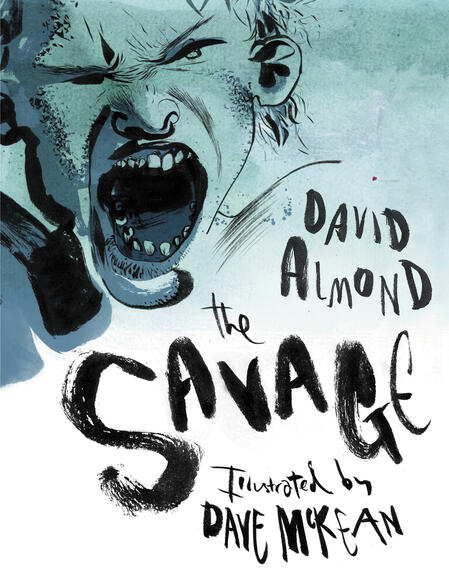
I relate to Blue out of all the characters in this story. He lost his father at a young age and has a very hard time expressing his feelings to others verbally. The entirety of the book is him expressing himself through quick and messy drawings of the savage boy's feelings, which represent his own.
The main conflict that Blue is experiencing is the emotional toll of losing his father. After he passes, Blue begins to realize he has a very hard time expressing himself verbally. This becomes evident when Blue is talking to his school counselor, Mrs. Malloy. At one point he says, "I couldn't speak. I grunted at her. I grunted again", then ran out of the school and to the woods. He eventually learns to express his feelings to others, through his stories of the savage. Blue's art and storytelling become his way of communicating his grief to his family, helping them to heal.

The most prevalent overarching theme in this story is expression. The scenes where this is apparent include where he shows his mother the stories of the savage. Here he is slowly coming to terms that this came from his mind, that its him expressing himself. Another scene where the theme emerges is when Hopper appears for the first time in Blue's stories of the savage. He writes, "When I wrote that, I felt much better. It was great to see Hopper through the eyes of the savage". In doing this he is expressing how he feels about Hopper with an untainted, honest approach.
Thw book starts with the author in the story (Blue) coming to terms with the events that took place in the story, seemingly after everything that happened. He explains that he wrote a story about a savage boy that came true, and that he wrote this story to understand his feelings and to explore his own grief. This is present throughout the entire story, and expresses the liberation that comes with self expression.
I would recommend this book to a number of niche categories of people. one such being people who lost an important family member at a young age, or people who struggle with self expression. Overall, though, I'd recommend this book to artists the most. The art style gives off the exact feeling Dave McKean- this books illustrator- was aiming for. The theme of self expression would also be something artists can relate to, myself included. Even without being in one of those categories, its a touching story of grief and expression that is worth a read!
Almond, Dave. The Savage. CandleWick Press, 2008